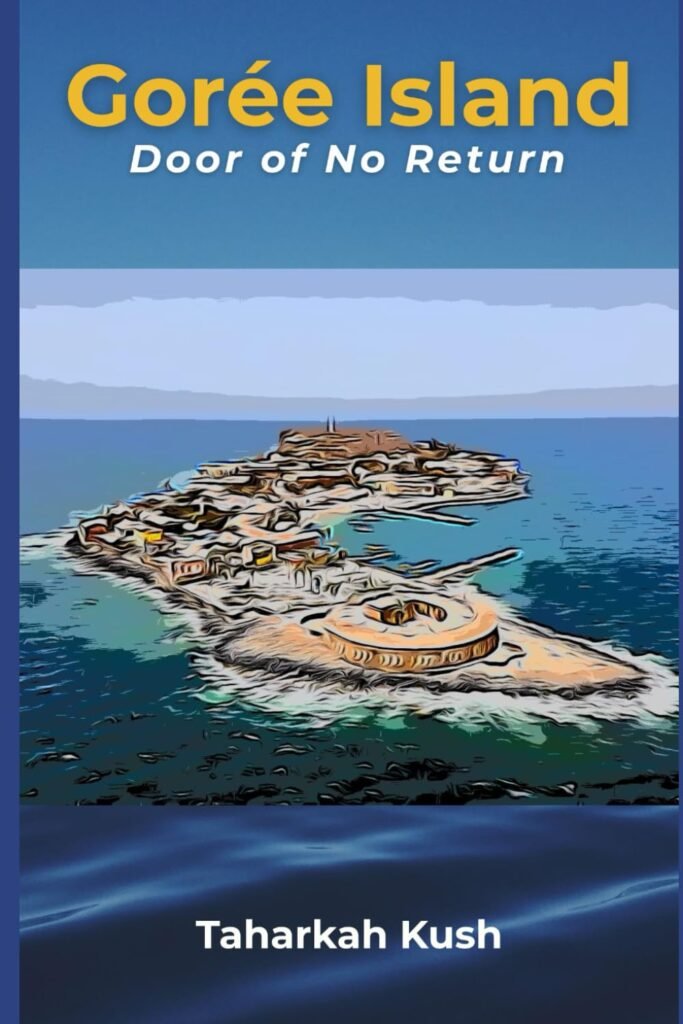
Taharkah Kush, author of Gorée Island: Door of No Return, explores the historical significance of Gorée Island, African identity, the transatlantic trafficking of enslaved Africans and the importance of reparations. Born in St. Ann, Jamaica, the birthplace of Marcus Garvey, Kush developed an early interest in African heritage. After relocating to Birmingham, England, he joined the African Caribbean Self-Help Organization (ACHSO), where his Pan-Africanist education deepened his understanding of African history, civilization and liberation movements.
Kush discovered Gorée Island unexpectedly during a business trip to West Africa. While visiting Senegal, he noticed lights across the water and learned from local residents about the island’s connection to the trafficking of African captives. Despite his extensive Pan-Africanist education, he had never encountered information about Gorée. This revelation inspired him to research and document its history.
According to Kush, Gorée Island’s strategic geographical location made it highly desirable to European powers. Following the arrival of the Portuguese in 1444, control of the island changed hands sixteen times between the Portuguese, Dutch, English and French. Its proximity to the Americas offered shorter shipping routes, making it a profitable centre for human trafficking. Kush identifies this exploitation as a capitalist enterprise that contributed to European economic development at Africa’s expense.
Drawing upon African oral histories and local accounts, Kush highlights the devastating human and demographic consequences of the slave trade. He presents estimates suggesting that millions of Africans perished during capture, transportation and the Atlantic crossing. Some of the figures he presents remain historically disputed. He also explores the influential role of the Signares, women of mixed African and European ancestry who occupied powerful positions within island society.
Today, Gorée Island is a peaceful community whose inhabitants trace their ancestry to various African nations. Despite its tranquil atmosphere, the island preserves disturbing reminders of its past, including dungeons, chains and the infamous Door of No Return, symbolising the forced separation of Africans from their homeland.
Senegal’s first president, Léopold Senghor, recognised the island’s historical importance and protected it from commercial development. Now a UNESCO World Heritage Site, Gorée serves as an educational centre and pilgrimage destination, enabling visitors and schoolchildren to engage with this painful history.
Kush argues that Gorée Island provides a tangible foundation for discussions surrounding reparations. He emphasises that reparations should focus on repairing the enduring damage caused by centuries of exploitation rather than assigning personal guilt. His book also examines the companies and institutions that benefited from African enslavement, highlighting their historical responsibility.
Central to Kush’s message is the importance of prioritising African voices, oral traditions and lived experiences when interpreting African history. He challenges European-centred historical narratives and encourages readers to engage directly with African perspectives.
Available through otlventure.com, Gorée Island: Door of No Return offers an exploration of the Maafa, historical accountability, cultural preservation and reparations. Ultimately, Kush presents Gorée Island as a powerful symbol of African suffering, resilience and remembrance, encouraging present and future generations to confront historical injustices, reclaim their heritage and recognise the continuing importance of African liberation, unity and restorative justice.